

EPAWA’s long range outlook is updated weekly every Friday morning before noon
Most recent update: Friday January 9th, 11:30 AM

Technical discussion for advanced readers:
The technical discussion below will feature two (2) subcategories: Precipitation, and Pattern Discussions. Storm possibilities will be discussed exclusively in the Premium Forum with intense model analysis leading up to any major snow, ice, or rain events, not publicly. To join this discussion and hear the updated thoughts from our team, visit The My Pocket Meteorologist Page by clicking HERE and select the “Premium Weather Forum” option.
Precipitation Discussion
OVERVIEW: The US drought monitor (photo toward the bottom of this outlook) remained nearly unchanged in this week’s update. In much of Central PA moderate drought conditions (D1) are designated for many of those areas, as well as maintaining an area around the Philadelphia metro and Poconos through Western New Jersey. Additionally, a severe drought designation (D2) has also maintained north of the I-78 corridor in PA to include parts of Carbon, northern Lehigh, and much of Northampton Counties, as well as parts of Sussex, Warren, and Morris Counties in NJ, far Southern Pike County in PA, Monroe County in PA, and a parts of Monroe County in PA. Abnormally dry conditions (D0) were noted across a vast majority of the remainder of our region, to now include coastal Southern NJ. A moderate drought (D1) designation was added to Sussex, Delaware this week. Overall dryness indicated is largely due to a much drier than average pattern from August the first week of January. We continue to expect overall drier conditions relative to average over the next 2 weeks of January, then perhaps a wetter end to the month. Projections for the month of January were maintained this week to account for this, and a slightly below average (0.0″ to -1.0″) precipitation outlook overall for the month. February projections were also maintained this week for a near to slightly above average (0.0″ to +0.5″) departure from average for the month as a whole, in accordance with longer term climate models and global observation trends. Snowfall year-to-date is near to slightly above average in most areas thanks to a faster start to the season in December. In January with the projected milder risks before mid-month and slightly below average precipitation over the first 2-3 weeks, snowfall projections were maintained “near average” with the expectation of most of the snow occurring during the 2nd half of January. With more moisture to work with and cooperative temperatures for snow, we also maintained February projections this week for near to slightly above average snowfall for the month as a whole.
Shorter term, a warm front will advance toward the region Saturday, and periods of rain will be enhanced by low pressure moving along the boundary Saturday afternoon. This will quickly be followed by a cold front Saturday late evening through part of the overnight with additional showers. Another cold front on the lead of the next trough will arrive Wednesday with showers, then snow showers are possible in its wake Thursday with a trailing wave, which could provide minor accumulations. We maintained the Winter storm signal in this week’s long range outlook for the January 17th-20th period, coming at a time when temperatures and the pattern could be more cooperative for snow to occur. A Winter storm signal highlights a favorable period for accumulating snow to occur, but is not a guarantee for snowfall at any given location. A 2nd Winter storm signal was introduced this week for the period between January 23rd and 26th.
Projections for the month of January were maintained at a slightly below average (0.0″ to -1.0″) precipitation outlook overall, with the expectation of a drier first three weeks of the month relative to average. February projections were also maintained this week for a near to slightly above average (0.0″ to +0.5″) departure from average for the month as a whole, in accordance with longer term climate models and global observation trends. January expectations are for near average snowfall for the month, with most of that occurring after mid-month. February projections were also maintained this week for near to slightly above average snowfall.
Breakdown of precipitation departures from normal over the next several weeks:
January 10th – January 16th: Near average
January 17th – January 23rd: Near to slightly below average
January 24th – January 30th: Slightly above average
January 31st – February 6th: Near average
February 7th – February 13th: Near to slightly above average
February 14th – February 20th: Near to slightly above average
Public/free available maps will be updated when a threat is imminent for significant weather on the weather alerts page throughout the year: http://epawaweather.com/weather-alerts/
Note: Any image below is clickable for larger viewing

A warm front will advance toward the region Saturday bringing periods of rain with low pressure enhancement, then is quickly followed by a cold front Saturday night (showers)

Pattern Discussion
OVERVIEW: January projections for the month as a whole were maintained this week for a slightly below average (-1.0°F to -3.0°F) temperature projection overall, in large part due to a milder period at times during the 2nd week of January. The cold start to the month and colder than average 2nd half of January should allow the month as a whole to still finish slightly below average despite the milder period mixed in. The February projections were maintained this week for another slightly below average (-1.0°F to -3.0°F) temperature projection using long term climate guidance and seasonal/global observation trends.
- December finished with solidly below average temperatures (-4.0°F to -7.0°F) and above average snowfall at most locations, and January began with below average temperatures as well. The expectation is that the milder risks will be relatively short lived through the middle of next week, then a big change to a more favorable pattern for at least cold temperatures will develop in time for the 2nd half of January and onward. This is largely due to the familiar +TNH pattern returning, coinciding with the Alaskan trough being replaced by ridging and a -EPO and cross-polar flow. This pattern may have some sustainability, and the moisture may increase late month into February with a more active subtropical jet to coincide with collapse of La Niña.
- The Madden-Julian Oscillation (MJO) is currently in the Circle of Death (COD) or NULL phase, and is expected to migrate into phase 6 just before mid-January. After about a week in phase 6, a propagation into phase 7 is likely through the 2nd half of January, and possibly reaching phase 8 in February. This progression typically indicates a milder signal shorter term, but that same tropical forcing that allows movement from the Indo-Pacific region farther eastward into the Western Pacific will help to establish the negative EPO teleconnection that will be running the pattern through the 3rd week of January, which trumps/offsets the warm signal typically seen in phase 6. Notable and continued decline of La Niña is expected, and this may lead to a more active subtropical jet to coincide with slightly below to below average temps from late January through at least the first half of February, coming during the coldest climatological period of the year.
- A composite average of the SST departures in the ENSO regions places it in weak La Niña territory, but this has become more east-based as the western regions (especially Niño 4) are taking a beating thanks to ongoing strong westerly wind bursts near the International Dateline. The Niño 4 (west-central Pacific) is the mildest of the 4 regions at 0.0°C, whereas the Niño 3.4 region (east-central Pacific) is at -0.5°C. The eastern regions of Niño 3 (east-central Pacific) is at -0.7°C, and Niño 1+2 region (near the Peruvian coast) is at -0.4°C as of January 8th. The expectation is for a weak La Niña to continue over the next few weeks, then returning to a [cool] ENSO neutral thereafter and continuing to rise. The aforementioned (and ongoing) strong westerly wind bursts near and west of the International Dateline should continue to result in La Niña’s demise from W-E across the Niño regions… west regions first, then with time, the eastern regions.
Average high temperatures are currently in the 36-41 °F range from north to south across our coverage region, which is about 1°F lower than at this point last week. Average temperatures will continue to fall over the next week until climatological annual minimums are reached near mid-January. Any above or below average stretches listed in the outlook will be relative to seasonal norms at that time, and it is important to note that cooler/warmer periods will be relative to the time of year we are talking about. For example, the slightly above average temperatures listed for the January 13th-14th period features highs in the 45-50° range, coming at a time when average highs are typically in the 35-40° range. Use the average highs/lows chart below providing a point of reference and transparency for what average temps are at each corresponding location through 2/15.
The month of January projections were maintained this week for a slightly below average (-1.0°F to -3.0°F) temperature projection overall, in large part to some balancing this week with milder temperatures (overall) expected. The cold start to the month and colder than average 2nd half of January should allow the month as a whole to still finish slightly below average despite the milder period mixed in. The February projections were also maintained this week for another slightly below average (-1.0°F to -3.0°F) temperature projection using long term climate guidance and seasonal/global observation trends.
Note: Any image below is clickable for larger viewing

Average temperatures over the next 6 weeks are shown at our major climate sites throughout the region, with annual climatological minimum temperatures achieved by mid-January.

Our Long Range Projections


Climate Prediction Center (CPC) Products
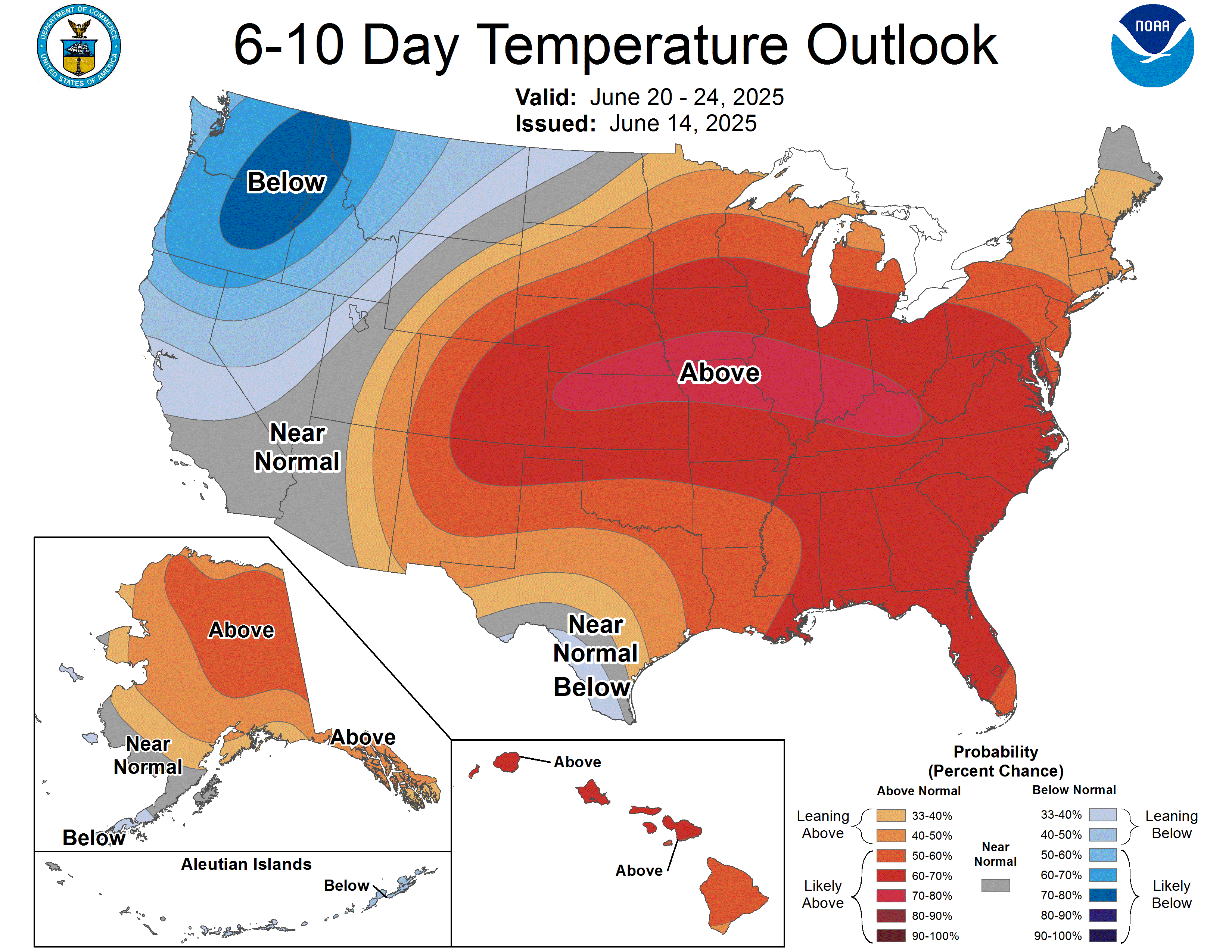
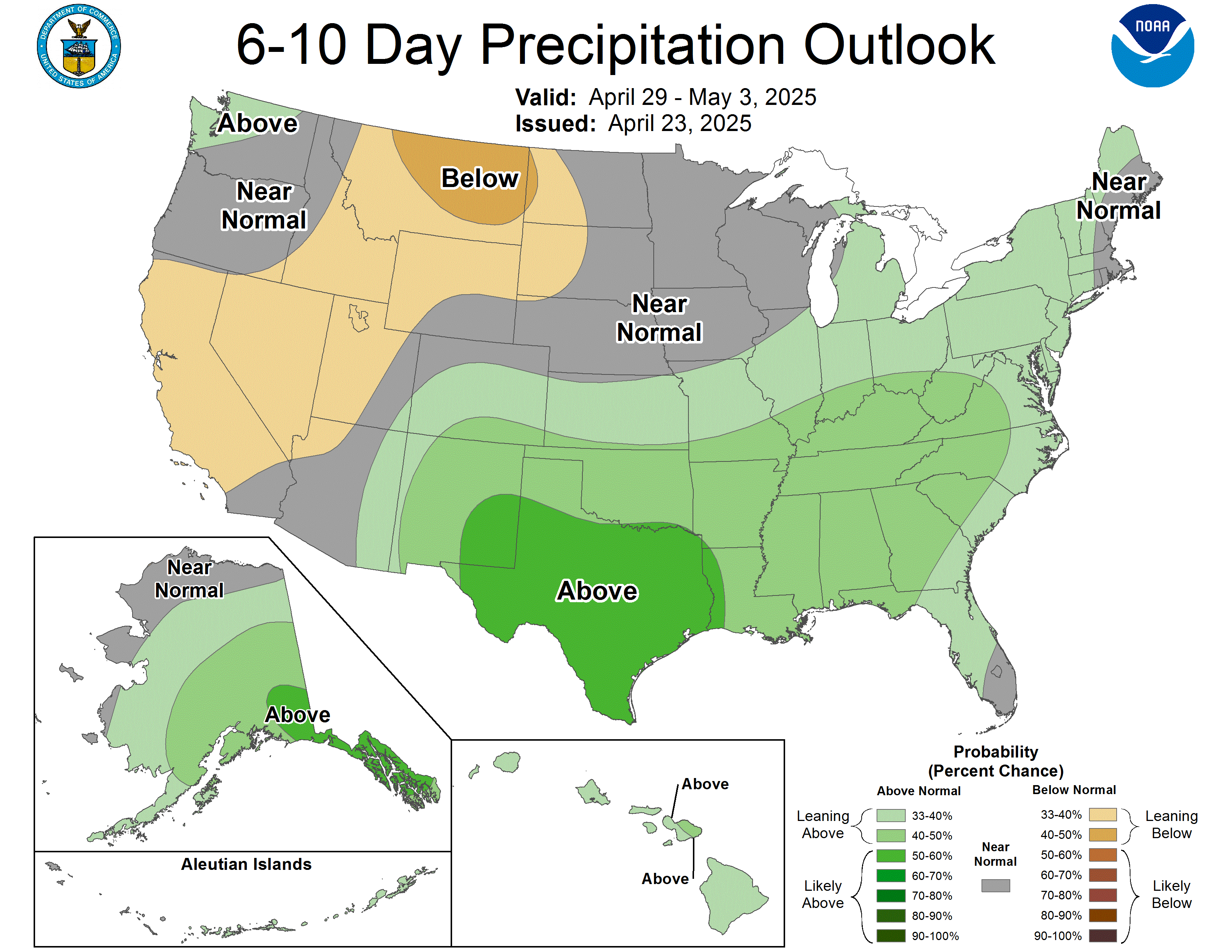
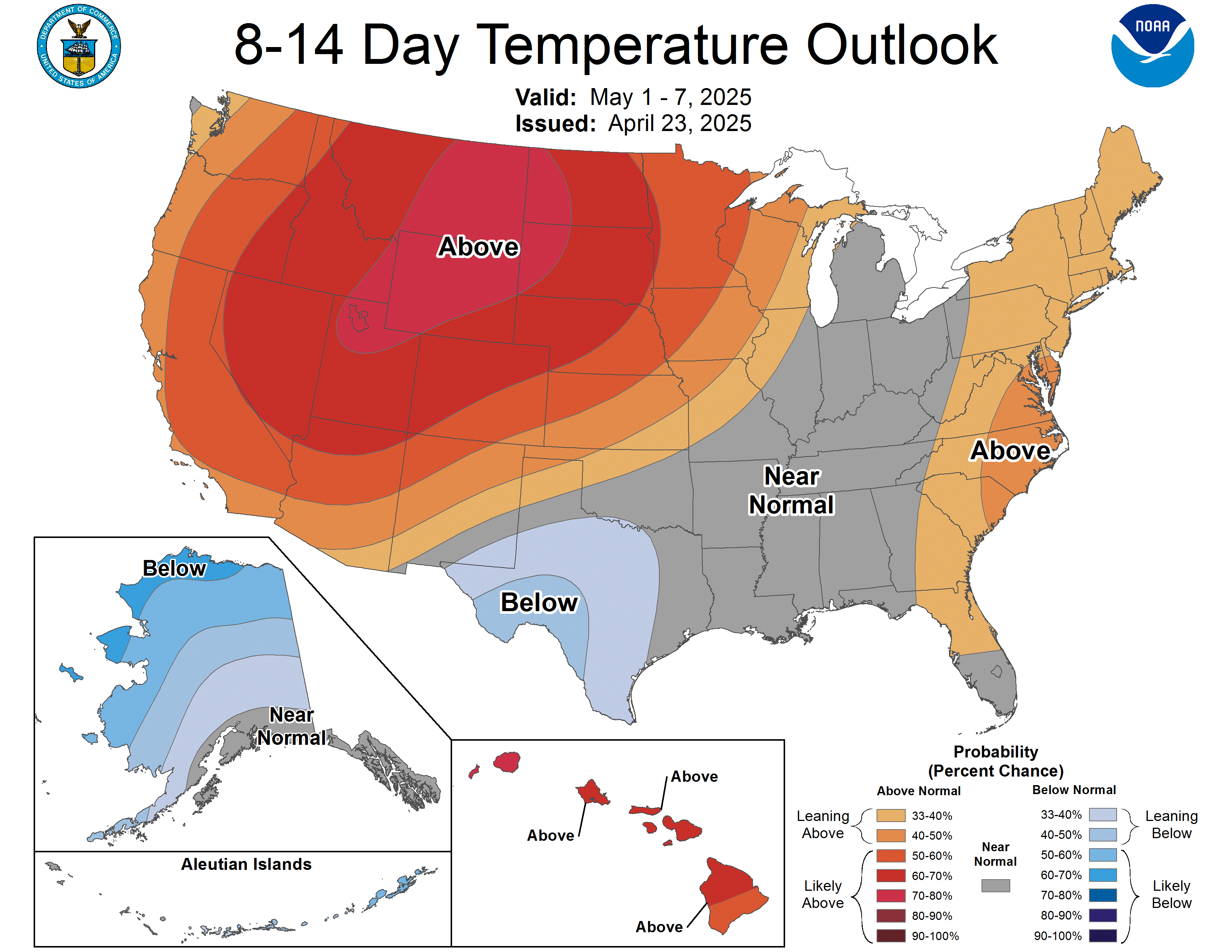
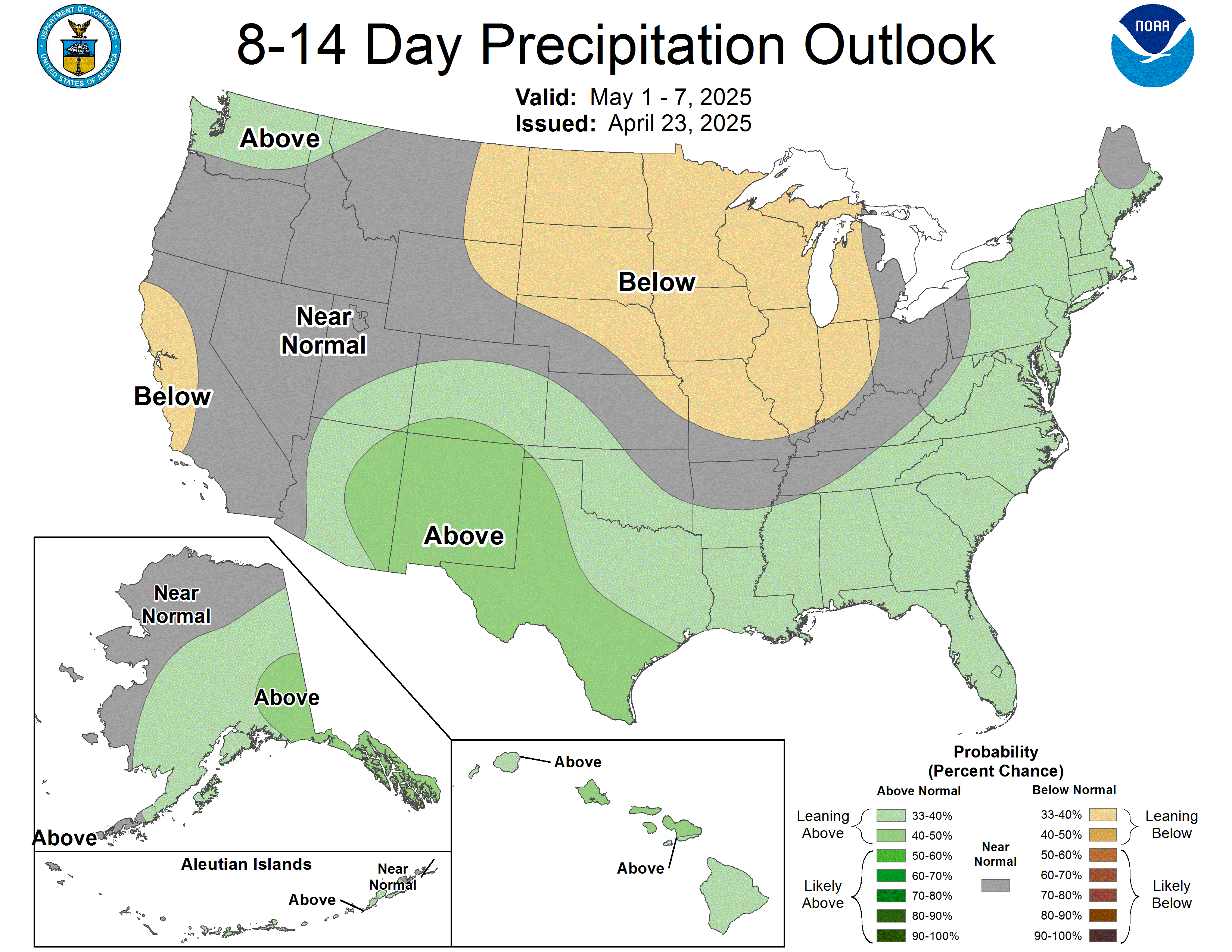
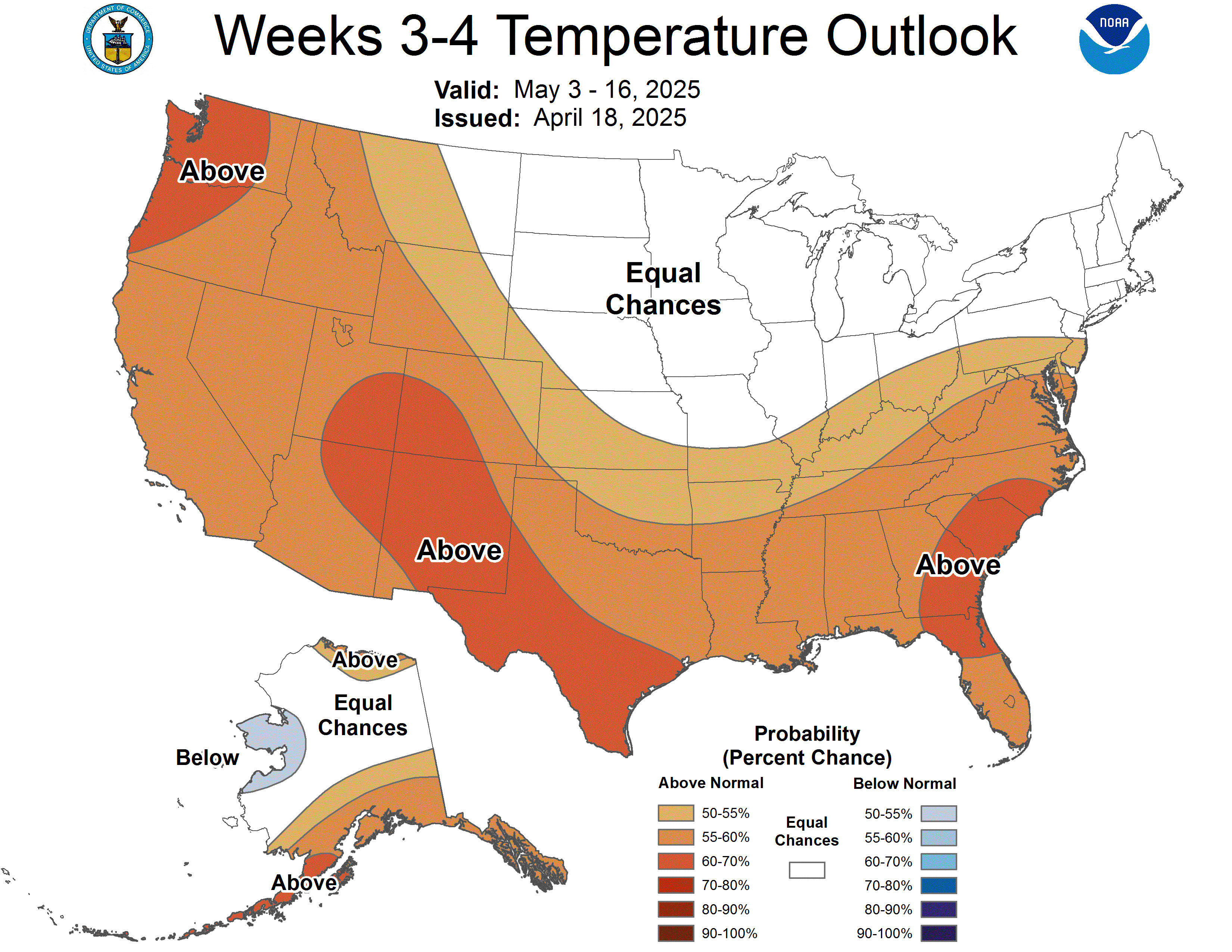
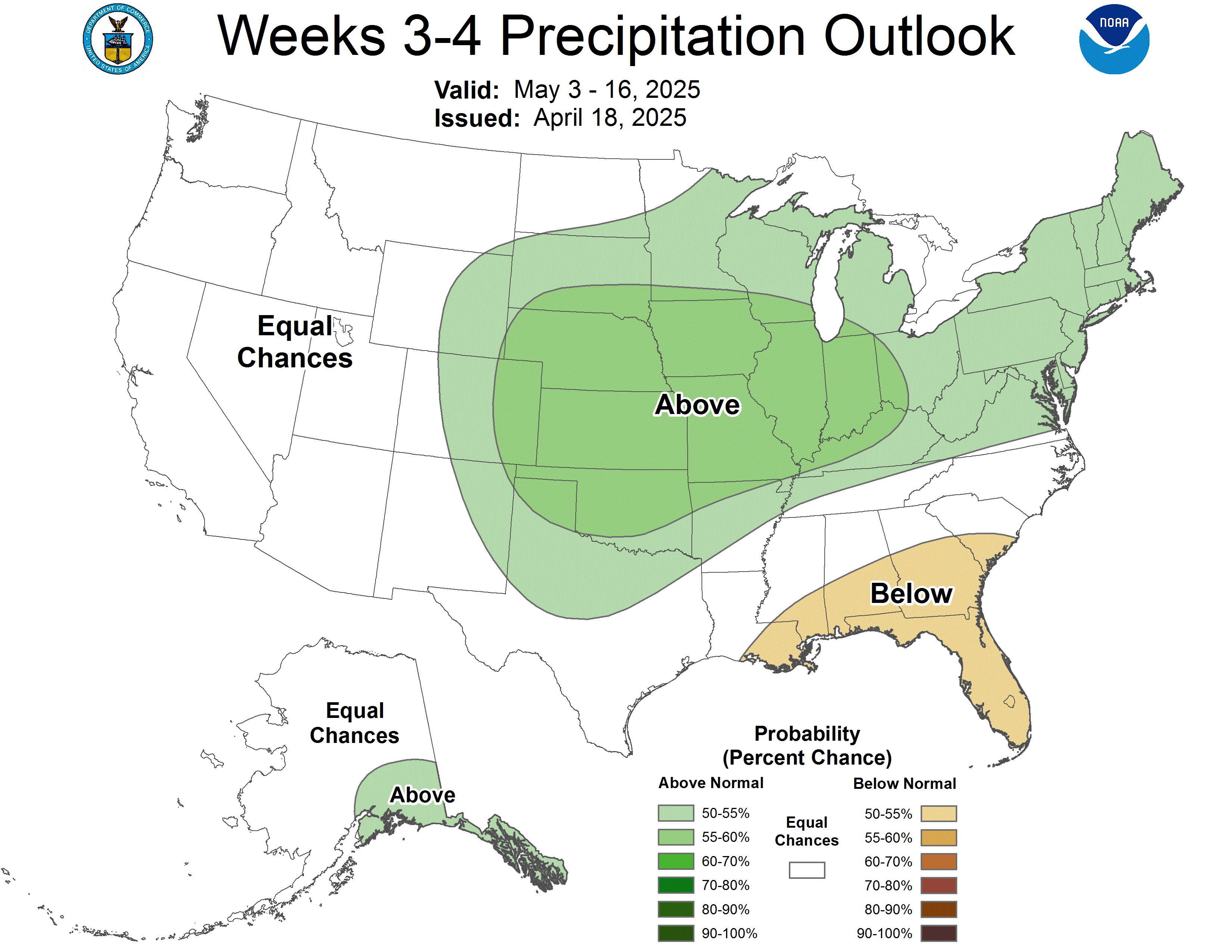
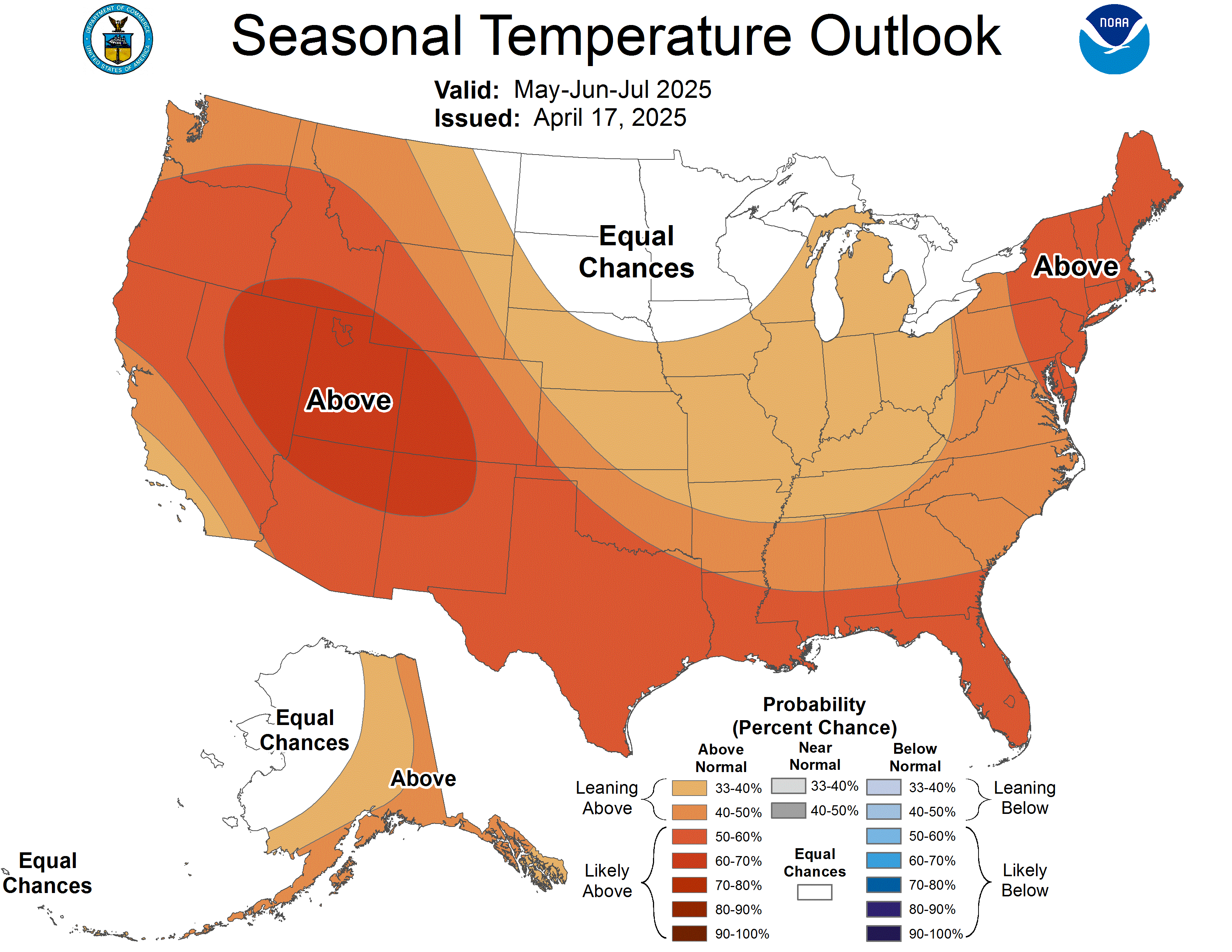
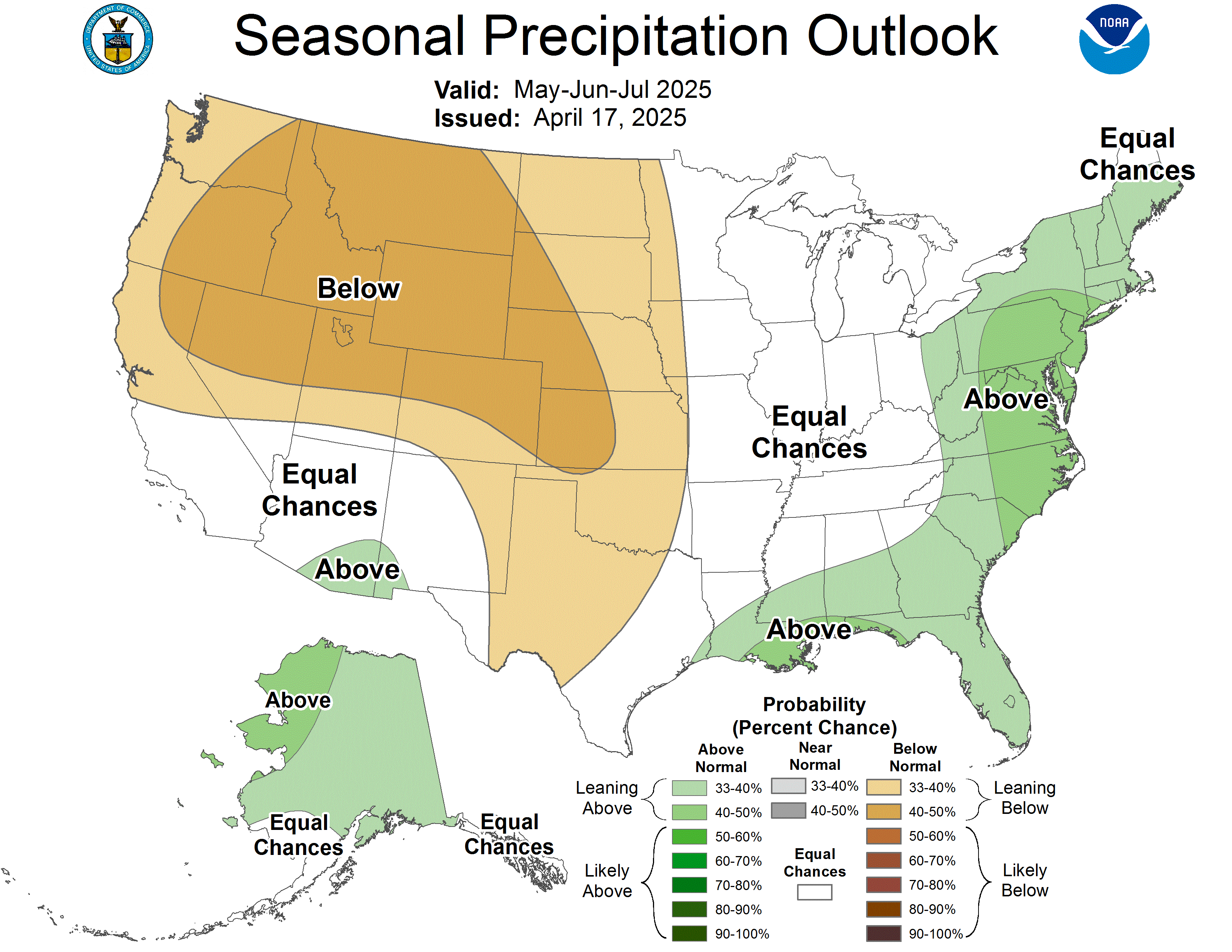
These products are from the NOAA Climate Prediction Center (CPC) and do not necessarily reflect the EPAWA forecast which is detailed above. All images below update automatically as the CPC releases new graphical products
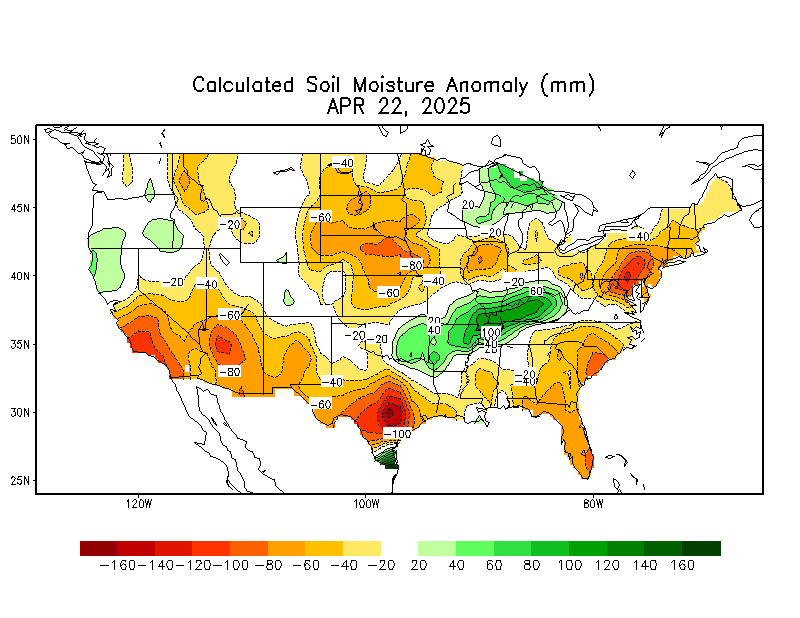
Soil Moisture Anomaly

Forecaster: EPAWA Meteorologist Bobby Martrich
Discussion last updated: Friday January 9th, 2026, 11:30 AM